
You can buy more attention. You cannot buy your way around a broken handoff.
A campaign brings someone to your website. They call, submit a form, or ask for a quote. Then the call goes unanswered. The form reaches an inbox nobody checks. The quote arrives without a clear next step. A good prospect quietly moves on.
The business sees the advertising bill and concludes that marketing does not work.
Sometimes the marketing really is the problem. Sometimes the opportunity arrived and the sales process lost it. Sometimes both need work.
Marketing is a multiplier. It puts more people through the experience your business already delivers. If that experience is confusing, slow, or disconnected, more attention can mean more wasted opportunity.
The reverse is just as real. A capable salesperson cannot consistently rescue campaigns aimed at the wrong audience, an offer that has not been explained, or promises the business cannot keep.
Before spending more, find the break between being discovered and becoming a customer.
What marketing has to get right
Marketing has a job beyond generating traffic. It should attract people who have a relevant need, explain why the business is a sensible choice, and help them take a clear next step.
That means the message, audience, offer, and destination need to agree.
If an ad promotes emergency service but the landing page offers only a general contact form with no response expectation, the experience breaks before a salesperson gets involved. If a campaign attracts bargain shoppers for a premium service, a low close rate may reflect poor targeting rather than weak sales.
More impressions will not solve that mismatch.
Marketing should answer: who is this for, what problem do we solve, why should someone trust us, and what happens next?
What sales has to get right
Sales starts when someone wants to explore whether your business can help. It is the conversation and process that connects that interest to a decision.
For a local business, that might be answering a call, understanding the job, scheduling an estimate, explaining the scope, and following up when appropriate. For an online store, the sales channel includes product information, checkout, payment, and support. It does not have to involve a sales team.
A working sales process has an owner for each inquiry. It acknowledges the customer, confirms fit, sets expectations, and makes the next action clear.
A CRM can help organize that work. It cannot make an unclear offer persuasive or take responsibility for a lead on its own.
The leak is often in the handoff
The most expensive gap can sit between the two functions.
A person is counted as a conversion because they clicked a phone number. Nobody knows whether the call connected. A form submission is reported as a lead, but the message was spam or the project was outside the service area. A qualified inquiry arrives, but nobody records whether it received an estimate.
Marketing celebrates the lead count. Sales complains about the quality. The owner still cannot see what happened.
You need shared definitions:
- Inquiry: someone made contact or requested information.
- Qualified opportunity: the need, location, timing, and scope fit what the business can serve.
- Proposal or estimate: a specific offer was delivered with a clear next step.
- Won customer: the customer accepted, booked, or purchased according to your business's definition.
Keep rejected inquiries visible too. A lead outside your service area tells marketing something different from a qualified prospect lost because nobody replied.
More leads and better conversion are different levers
Consider a hypothetical example, not a Nordax client result.
One business receives 100 qualified inquiries and wins 10 customers. Another receives 50 qualified inquiries and wins 15. The first has more opportunities. The second converts a larger share of its opportunities.
That does not automatically make the second business more profitable. Acquisition costs, job value, fulfillment costs, capacity, and repeat purchases still matter. It does show why traffic and lead volume alone cannot tell you whether the system is working.
A useful starting model is:
Qualified opportunities × win rate × average sale value = revenue from those opportunities.
This is a simple planning model, not a forecast. Use the same time period and cohort, and allow for the time between an inquiry and a sale. Revenue also is not profit.
Improve the weakest part before assuming that a larger marketing budget is the answer.
How to tell which side needs work
Look at the path in stages rather than treating every disappointing month as one marketing problem.
| What you see | What to inspect first |
|---|---|
| Few relevant people discover the business | Visibility, audience, positioning, and distribution |
| Relevant visitors arrive but do not inquire | Offer clarity, credibility, mobile usability, and the next step |
| Plenty of inquiries, little genuine fit | Targeting, campaign promises, service areas, and qualification |
| Qualified inquiries receive slow or inconsistent responses | Routing, ownership, notifications, and capacity |
| Good conversations rarely become accepted estimates | Scope, price explanation, trust, objections, and follow-up |
| Sales are growing but profit is not | Acquisition cost, margins, delivery capacity, and customer retention |
These are starting points. A single metric rarely establishes the cause. Seasonality, tracking errors, long buying cycles, and changes in demand can also affect the numbers.
Test your own sales channels
Start with the experience a customer actually has.
Call the published number during business hours. Test the contact form on a phone. Try booking an appointment. Follow the path from an ad or Google Business Profile to the page it opens.
Check whether the action works and whether the business receives it. A success message on a form proves very little if the inquiry never reaches the right person.
Then follow a recent sample of legitimate inquiries through the process:
- Where did each inquiry come from?
- Was it a fit for the business?
- Who responded, and when?
- What next step was agreed?
- Was an estimate or proposal delivered?
- What was the outcome, and why?
Do not send fake bookings into a live calendar or create unnecessary work for your team. Mark internal tests clearly and exclude them from reporting.
Give marketing and sales one feedback loop
A weekly review can be simple. Look at qualified opportunities, response times, estimates, wins, losses, and the reasons behind them.
Sales should tell marketing which customers are a good fit, what they ask before buying, and why they decline. Marketing should tell sales what was promised, where the inquiry came from, and what the customer saw before making contact.
Use that information to improve the experience. Repeated confusion about pricing may call for clearer scope information. Repeated inquiries from the wrong area may call for tighter targeting. Missed calls during busy periods may call for better coverage or a callback process.
The purpose is to identify what to fix, not to assign blame.
Keep the diagnosis attached to the stage
Our visibility and marketing explainer covers the difference between attention and a useful customer path. This article focuses on the handoff after contact: who responds, how the request is qualified, what is promised and whether follow-up happens.
A workflow review can start with existing tools. The Mountain Christian Counseling project illustrates how service information, booking, payment and administration can connect. Custom software should solve an identified handoff problem, not become another subscription or system the team ignores.
Build the connection before turning up the volume
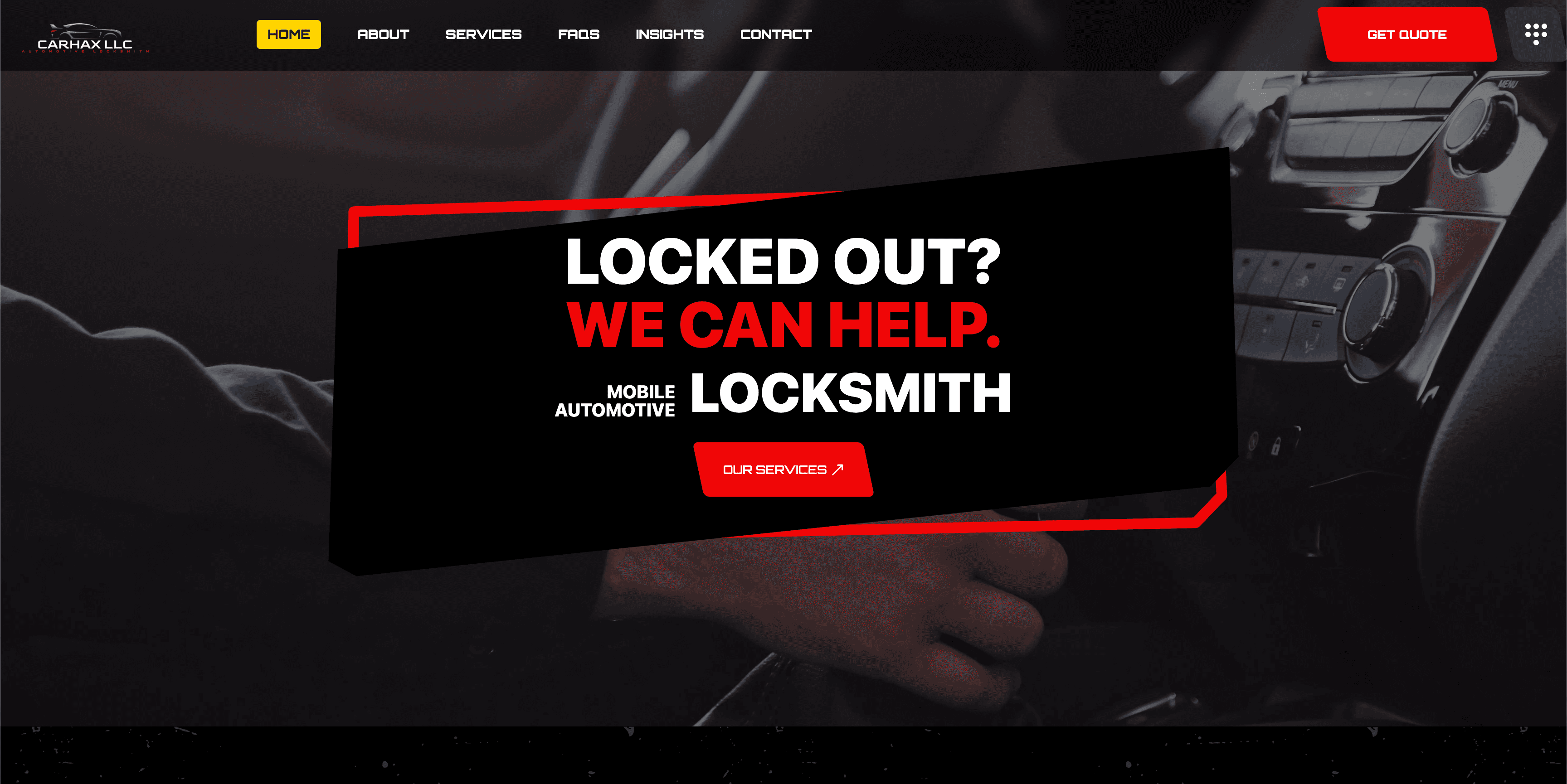
Our Carhax case study describes connected work across the website, Google Business Profile, service information, and conversion paths. The owner reported a change from roughly three calls a week to three to six a day.
That is an inquiry-volume result. It does not establish a close rate, profit increase, or outcome another business should expect. The useful lesson is the connection between discovery and an actionable next step, rather than crediting one isolated tactic for all the growth.
Your business may need more visibility. It may need a clearer website, a better offer, or a sales process that follows through. Often, those pieces need to be designed together.
At Nordax Digital, our work connects brand positioning, websites and business systems, visibility, and custom software around the way a business operates.
Before asking how to get more leads, ask what happens to the ones you already receive.
If you want help finding the gap, let's talk about your business. We can start with the path from discovery to inquiry to sale and build a practical plan around the part that needs attention.