


Why a Bad Website Can Be Worse Than No Website at All
For years, business owners have been told that every company needs a website.
That advice has created a dangerous assumption: as long as something is online, it is better than nothing.
It is not.
A simple, accurate website can help a business. A poorly planned website can actively work against it by confusing customers, weakening search visibility, and feeding search engines and AI systems an inaccurate understanding of the company.
No website creates a visibility problem.
A bad website creates a misinformation problem.
And visibility can often be built faster than misinformation can be corrected.
Your Website Is Publishing Data About Your Business
A website is no longer just a digital brochure. It is one of the primary sources machines use to interpret a business.
Search engines, maps, directories, voice assistants, and AI-powered search systems examine signals throughout a website to determine:
- what the company does;
- which services it provides;
- where it operates;
- which topics it has authority on;
- how its pages relate to one another;
- and whether its information appears consistent and trustworthy.
Those conclusions are not based on one paragraph on the homepage.
They are formed from the complete structure of the website: page hierarchy, navigation, internal links, headings, service descriptions, location information, metadata, structured data, and the relationships between different pieces of content.
When those signals agree, the business becomes easier to understand.
When they conflict, machines are forced to interpret incomplete or contradictory information.
How a Website Teaches Systems the Wrong Thing
Consider a company that primarily provides commercial landscaping.
Its homepage calls it a landscaping company. Its Google Business Profile categorizes it as a landscaper. But its website contains mostly residential lawn-care content, several pages about patios and retaining walls, vague service descriptions, and structured data identifying it as a general contractor.
The company may know exactly what it does.
The website does not communicate that clearly.
Search engines now have to decide whether the business is primarily:
- a commercial landscaping company;
- a residential lawn-care provider;
- a hardscape contractor;
- or a general contractor.
The result may not be a formal penalty. The more common outcome is uncertainty.
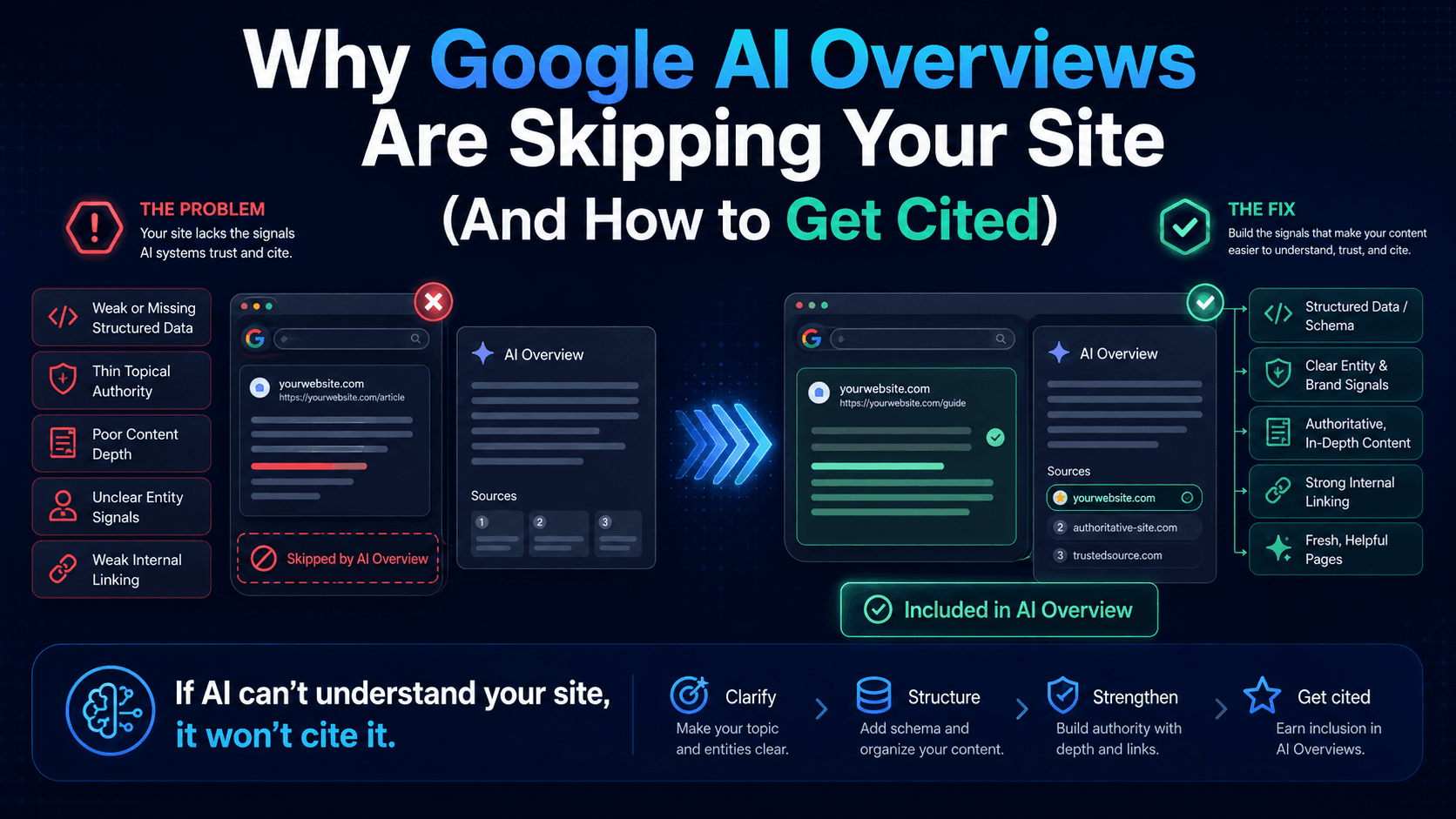
The company becomes less clearly relevant for the searches it actually wants to appear in. Its pages compete with one another. Search engines may rank the wrong page for the wrong query. AI systems may describe the company inaccurately or exclude it from recommendations because they cannot confidently determine where it belongs.
This is why consistency is more than a branding concern.
It is a data integrity issue.
Structural Problems Become Visibility Problems
A website can contain accurate sentences and still communicate the wrong overall message.
If an important service page is buried several levels deep, the site suggests that service is not central to the business.
If every page links to everything else without a clear hierarchy, search engines receive little guidance about which topics and services matter most.
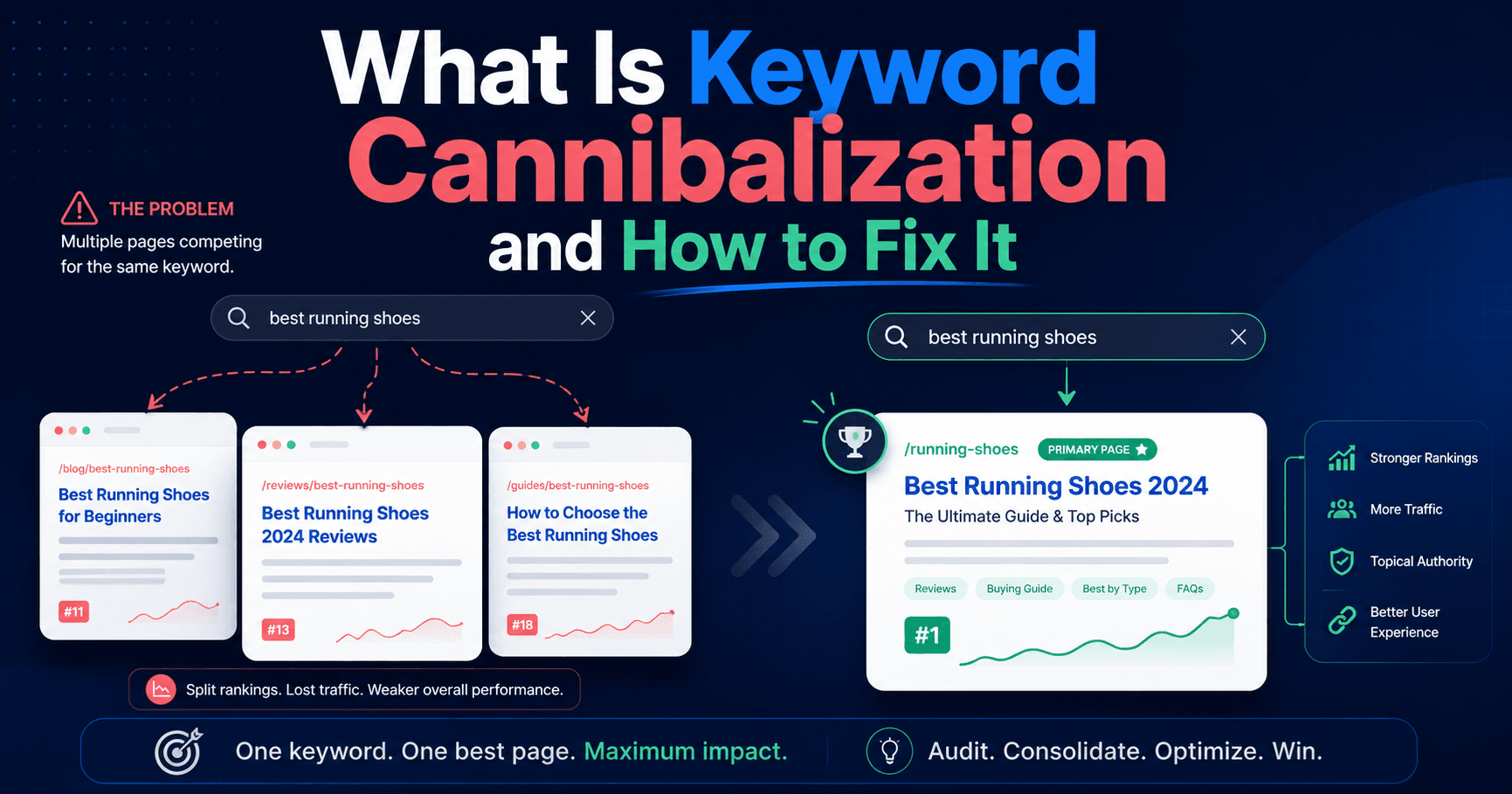
If multiple pages target nearly identical searches, they may compete instead of strengthening one another.
If blog content never connects to services, case studies, locations, or conversion pages, the website accumulates information without building a coherent body of authority.
If location pages are duplicated, thin, or disconnected from the company’s actual service footprint, local relevance becomes difficult to establish.
These issues are largely invisible to the business owner. The website still loads. The pages still exist. The logo still looks professional.
But underneath the visual design, the site may be distributing authority poorly, creating conflicting classifications, and making the company harder to retrieve for relevant searches.
AI Search Raises the Stakes
Traditional search generally returned a list of pages and left the user to interpret them.
AI-powered search increasingly interprets the information first.
It may summarize a company, compare it with competitors, describe its services, determine whether it serves a particular location, or decide whether it belongs in a recommendation.
That means ambiguity has become more expensive.
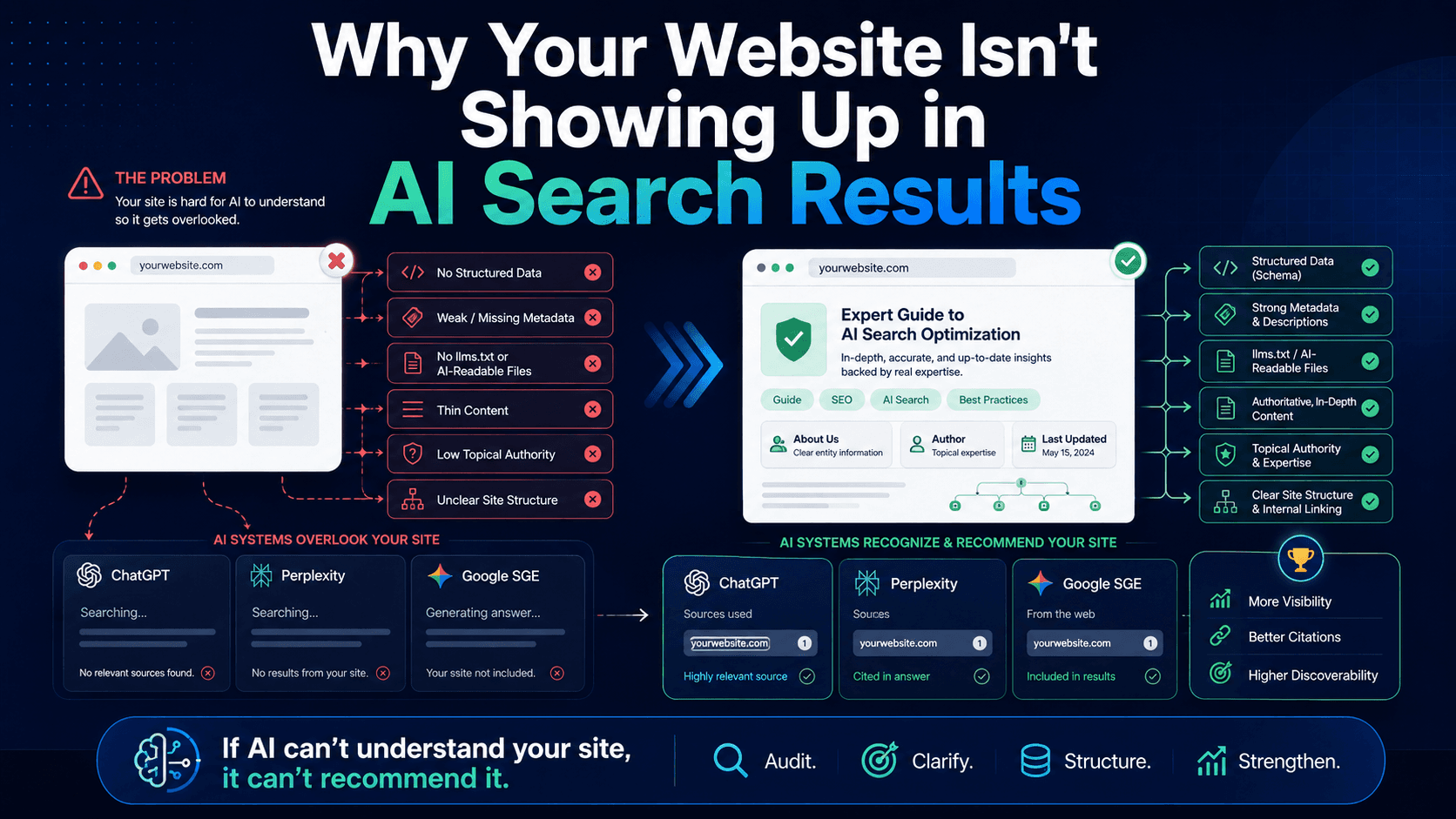
When an AI system encounters conflicting service descriptions, inconsistent location data, unclear business classifications, or poorly connected content, it may produce an incomplete or incorrect interpretation.
It might associate the company with the wrong service.
It might overlook a service the company considers central.
It might place the company in the wrong geographic context.
Or it may avoid citing or recommending the business because other sources appear easier to understand.
A company cannot control every answer an AI system generates. It can, however, control the quality and consistency of the information it publishes.
The Damage Extends Beyond Rankings
Structural weakness also affects the people who reach the website.
A visitor may arrive through an advertisement, a referral, a map listing, or a search result. Once there, the website must quickly confirm three things:
- This company provides what I need.
- It serves someone like me in my location.
- I trust it enough to take the next step.
A structurally weak website often fails before the visitor ever evaluates the quality of the company.
Services are difficult to find. Navigation reflects internal company language instead of customer intent. Contact information is inconsistent. Calls to action compete with one another. Forms fail on mobile devices. Pages load slowly. Trust signals appear far away from the decisions they are meant to support.
The website may technically receive traffic while quietly losing qualified customers.
This is why businesses often misdiagnose website problems as advertising problems, SEO problems, pricing problems, or market problems.
More traffic cannot repair a site that miscommunicates the business and loses the people who arrive.
Why the Damage Can Take Time to Correct
Replacing a poorly built website does not immediately erase the understanding formed around the old one.
Search engines may need time to recrawl pages, process redirects, reconsider site relationships, and reevaluate which pages should appear for which searches.
Incorrect information may also exist outside the website in business listings, cached search results, third-party directories, data aggregators, social profiles, and AI-generated summaries.
If the old site created duplicate pages, conflicting location signals, incorrect structured data, or unclear service associations, rebuilding is only the first step.
The broader digital footprint may also need to be corrected and reinforced.
That is the hidden cost of putting up “something for now.”
Temporary websites have a way of becoming permanent data sources.
What a Structurally Sound Website Does
A strong business website should create one clear and consistent interpretation of the company.
It should define:
- who the business is;
- what it does;
- which services are most important;
- who those services are for;
- where the business operates;
- why it is credible;
- and what action a potential customer should take next.
Its page hierarchy should reflect the actual priorities of the business.
Its internal links should connect related services, expertise, locations, case studies, and educational content.
Its structured data should accurately describe what is visible on the page.
Its business name, address, phone number, service areas, categories, and core messaging should align with the company’s broader digital presence.
Its design should support understanding rather than compensate for the absence of it.
At Nordax, we describe this foundation as Visibility Infrastructure: the technical, structural, and informational systems that make a business understandable to both people and machines.
A Website Is Not Automatically an Asset
The question is no longer whether a business has a website.
The question is what that website is teaching the systems and people that encounter it.
A clear, accurate, structurally sound website can strengthen discoverability, reinforce credibility, and turn attention into business.
A poorly built website can create the opposite effect. It can confuse customers, weaken relevance, distort how the company is classified, and leave behind problems that take months to repair.
Having something online is not always better than having nothing.
A website becomes an asset only when it gives customers, search engines, and AI systems a clear and trustworthy understanding of the business.
Otherwise, it is not merely underperforming.
It may be actively working against the company it was built to support.